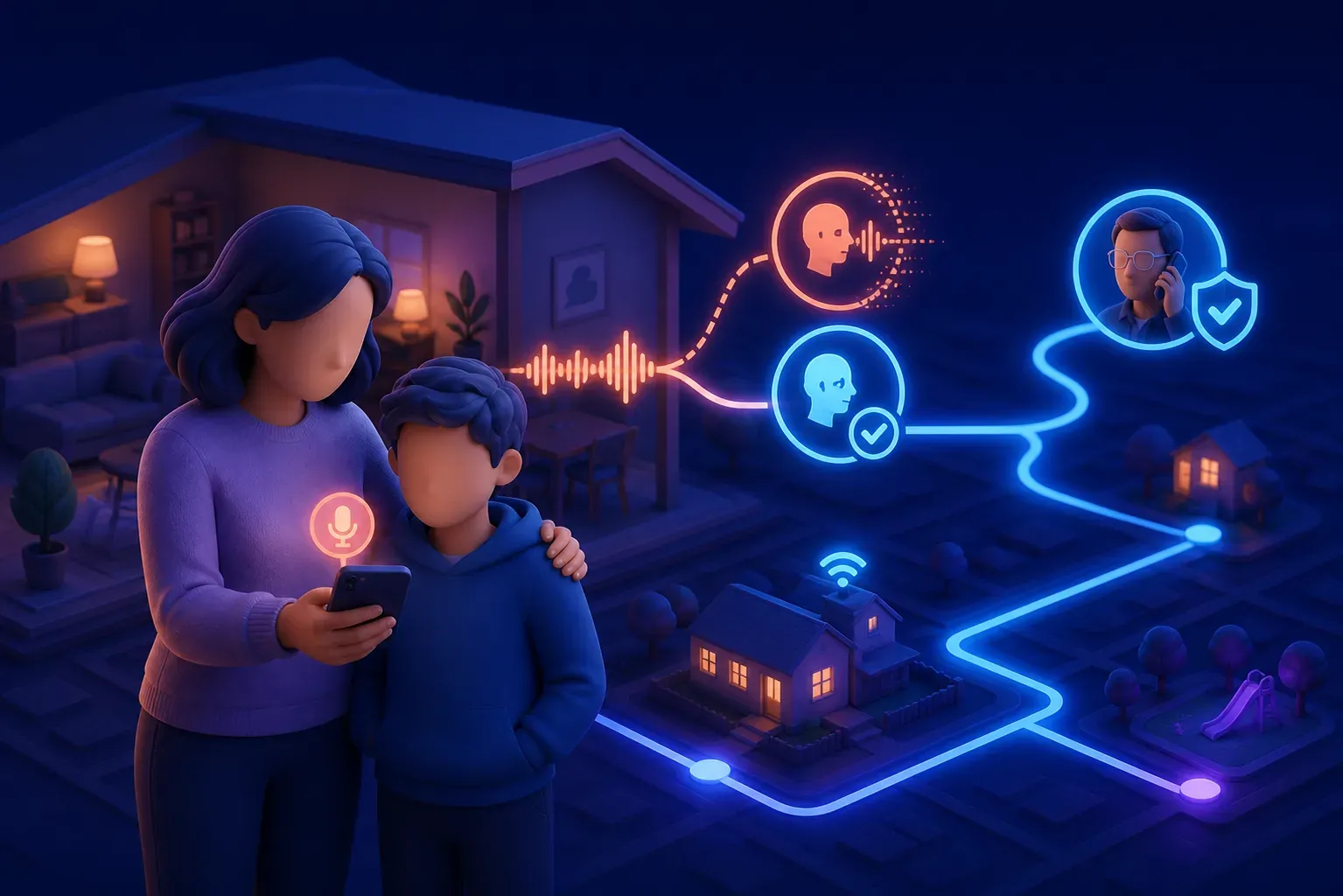
Would you recognise an AI clone of your child's voice?
Voice cloning can make an urgent family scam sound frighteningly familiar. A simple verification plan can help everyone pause and check before acting.
On this page
The phone rings and the voice sounds like your child. They say they are hurt, frightened or in trouble. They need money immediately and beg you not to call anyone else.
Every instinct tells you to act.
That urgency is exactly what a scammer wants. Artificial intelligence can now create a convincing copy of a person’s voice from a short recording. Public videos, voice messages and social media clips may provide enough material to imitate the way somebody sounds.
Families do not need to become suspicious of every call. They need a simple plan that creates enough time to verify who is really speaking.
A familiar voice is no longer proof
Voice cloning can reproduce tone, accent and familiar phrases. A scammer may combine it with names, relationships, locations or plans found online.
The story usually creates fear and urgency. The caller may claim there has been an accident, an arrest, a lost phone or another emergency. They might ask for a bank transfer, gift cards, account information or a verification code.
They may also demand secrecy. This stops the person receiving the call from contacting somebody who could expose the story.
Scamwatch warns that scammers can use a few seconds of recorded audio to create a voice clone. Its advice is to call the friend or family member back using their real number.
Create a family verification plan
Agree on the plan before a stressful call happens. Include children, parents, grandparents and anyone who may receive an urgent request involving the family.
The plan can be:
- Pause and avoid sharing money or information
- End the unexpected call
- Call the person back on the number already saved
- Contact another trusted family member
- Use a private family verification phrase
- Call emergency services if somebody may be in immediate danger
An honest caller in a real emergency will understand that you need to verify the situation. A few moments spent checking will not make you uncaring.
Choose a private verification phrase
A family phrase adds another check when a voice or message appears convincing. Choose something memorable but unrelated to information people could find online.
Avoid birthdays, pet names, schools, addresses and favourite sports teams. Do not post the phrase, save it in a shared social media conversation or use it casually around other people.
Make sure everyone understands when to use it. If the caller avoids the question, guesses incorrectly or creates more pressure, end the call and verify through another person.
The phrase should be one part of the plan, not the only protection. It could be overheard or shared by mistake, so calling a known number remains important.
Teach children what the family will do
Children should know that the plan protects them too. A scammer may pretend to be a parent, grandparent, teacher or police officer. Explain that trusted adults will not be angry when they pause to check. Children should never send money, share a password or provide a verification code because a caller sounds upset or authoritative.
If a child receives a frightening call, they should end it and contact a trusted adult through a known number. If they believe somebody is in immediate danger, they should call Triple Zero.
Reduce the information available to scammers
Review who can see family social media profiles and voice recordings. Private profiles, limited identifying details and careful audience settings can reduce what strangers can collect.
Be cautious when an unexpected message says a family member has a new number. Do not continue the conversation until the change has been confirmed through the person’s existing number or another trusted relative.
If money or information has been shared
Contact the bank immediately if money was transferred or payment details were provided. Ask whether the transaction can be stopped or recalled.
Save the phone number, messages, call time and payment receipt. Report the incident to Scamwatch and, where appropriate, ReportCyber. Change affected passwords and turn on multi factor authentication if account information was exposed.
Make verification an act of care
Scammers rely on love, fear and urgency to make people act before thinking. A family verification plan turns that emotional moment into a familiar routine.
Pause, call back and confirm through somebody you trust. Taking time to verify an emergency does not mean you care less. It helps ensure your support reaches the person who truly needs it.